


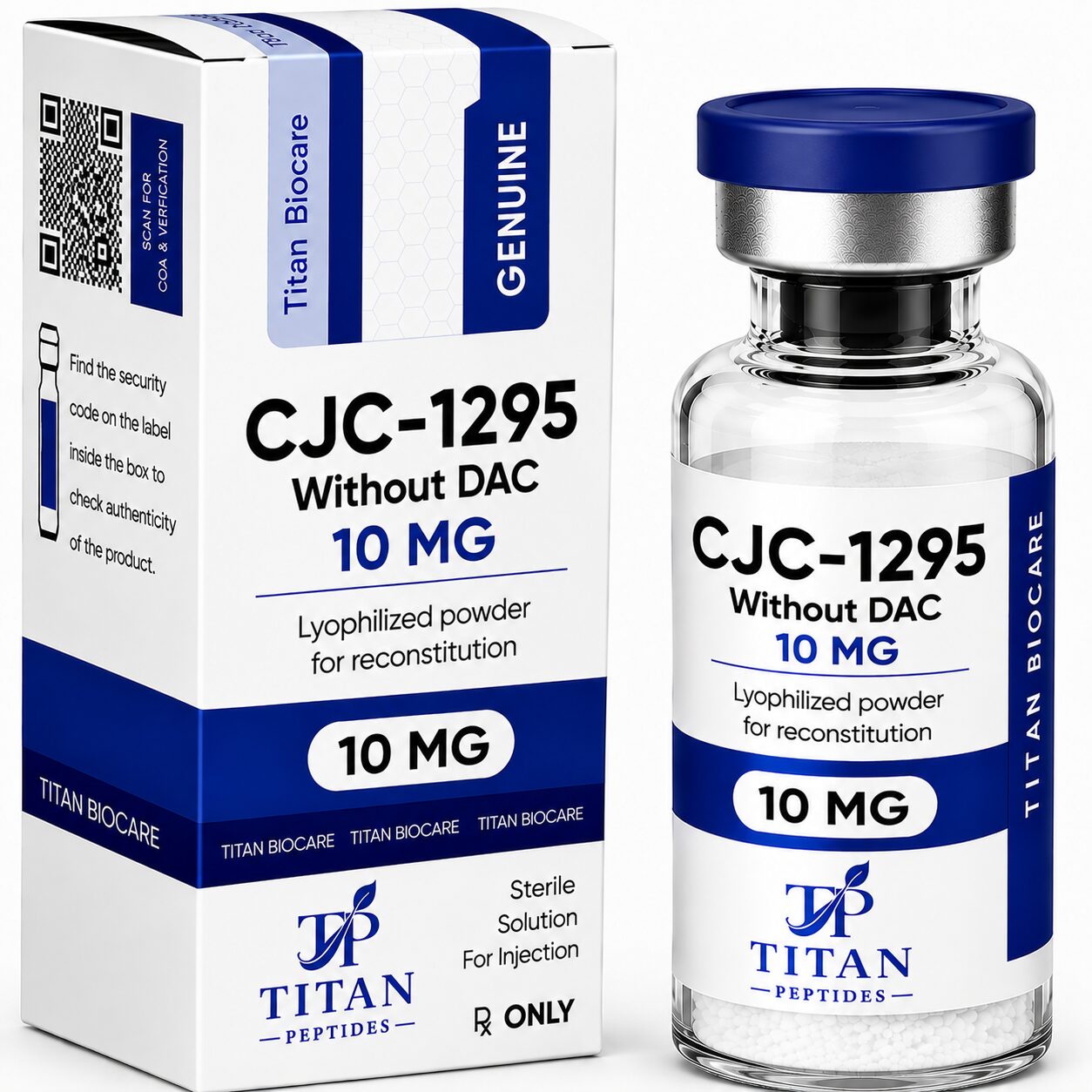
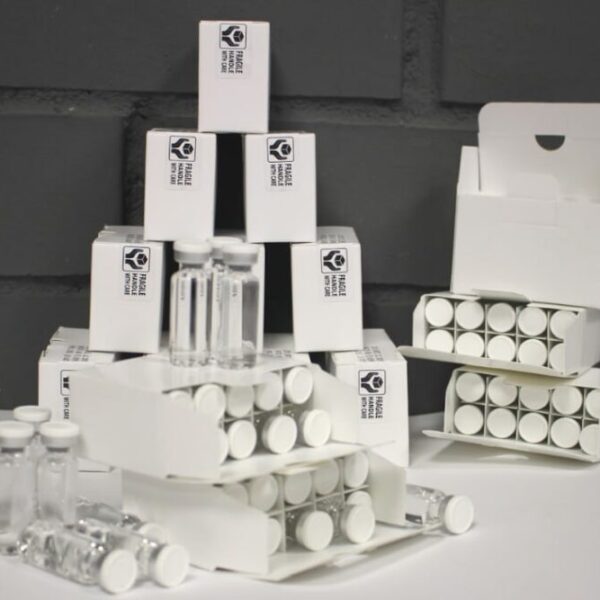
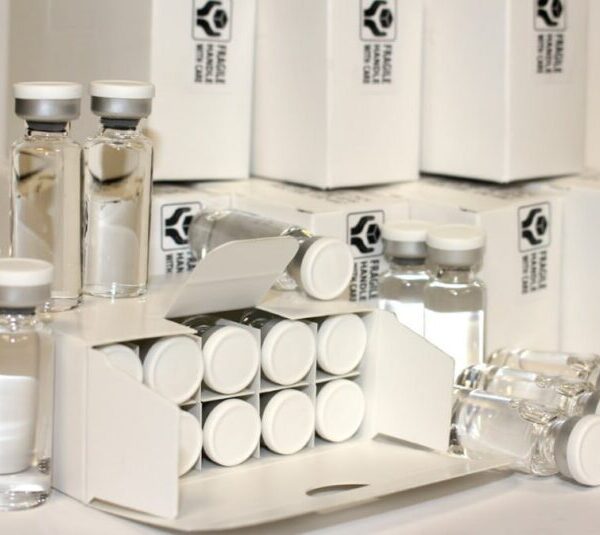
CJC-1295 Without Dac 10mg 1kit
$95.00
CJC-1295 Without DAC, also known as Modified GRF (1-29) or Mod GRF (1-29), is a synthetic peptide based on the biologically active portion of growth hormone-releasing hormone (GHRH). This research compound is studied for its interaction with GHRH receptors and its potential influence on growth hormone-related signaling pathways. CJC-1295 Without DAC differs from CJC-1295 with DAC because it does not contain the Drug Affinity Complex modification associated with the longer-acting form.
What Is CJC-1295 Without DAC?
CJC-1295 Without DAC is a synthetic analog of the first 29 amino acids of growth hormone-releasing hormone (GHRH). This fragment, commonly identified as GRF (1-29), was investigated because early research suggested that much of the biological activity of the naturally occurring 44-amino-acid GHRH molecule could be retained within its N-terminal 29-amino-acid sequence.
Further peptide engineering resulted in Modified GRF (1-29), commonly referred to as Mod GRF (1-29). The modifications were designed to improve the molecule’s resistance to enzymatic degradation and alter characteristics such as stability and receptor interaction.
Four substitutions distinguish Modified GRF (1-29) from the original GRF (1-29):
- Position 2: Alanine is replaced by D-alanine. The use of a D-amino acid is intended to make the peptide less susceptible to enzymatic breakdown.
- Position 8: Asparagine is replaced by lysine. This substitution changes the chemical properties of the sequence and may influence interaction with GHRH receptors.
- Position 15: Histidine is replaced by D-phenylalanine, another modification intended to improve resistance to enzymatic degradation.
- Position 27: Cysteine is replaced by N-methylglycine, also known as sarcosine. This modification may reduce susceptibility to enzymatic cleavage.
Together, these structural changes were developed to produce a more stable GRF analog with altered biological characteristics.
A key distinction is that CJC-1295 Without DAC does not contain the Drug Affinity Complex used in DAC-containing CJC-1295. Consequently, the two compounds are investigated as distinct peptide analogs with different pharmacokinetic characteristics.
CJC-1295 Without DAC Specifications
Molecular Weight: 3367.95 g/mol
Molecular Formula: C152H252N44O42
Sequence: H-Tyr-D-Ala-Asp-Ala-Ile-Phe-Thr-Gln-Ser-Tyr-Arg-Lys-Val-Leu-Ala-Gln-Leu-Ser-Ala-Arg-Lys-Leu-Leu-Gln-Asp-Ile-Leu-Ser-Arg-NH2
Primary Name: CJC-1295 Without DAC
Synonyms: Modified GRF (1-29), Mod GRF (1-29)
CJC-1295 Without DAC Research
CJC-1295 Without DAC and Somatotroph Cells
Research involving Modified GRF (1-29) has focused extensively on its interaction with growth hormone-releasing hormone receptors located on somatotroph cells within the anterior pituitary.
Somatotrophs are specialized pituitary cells responsible for synthesizing and releasing growth hormone. In experimental models, binding of a GHRH analog to its receptor can initiate intracellular signaling processes associated with growth hormone secretion.
Following receptor activation, G-protein-mediated signaling may stimulate secondary messenger systems, including cyclic adenosine monophosphate (cAMP) and related intracellular pathways. These signaling events can activate protein kinases and other regulatory proteins involved in cellular communication.
The downstream signaling may influence transcriptional activity within the cell and support processes associated with the synthesis and secretion of growth hormone. These mechanisms provide the basis for studying CJC-1295 Without DAC and related GHRH analogs in laboratory research.
CJC-1295 Without DAC and Growth Hormone Research
Scientists have investigated modified GRF analogs to better understand how structural modifications affect growth hormone secretion.
In experimental research, exposure to modified GRF sequences has been associated with increases in growth hormone release from somatotroph cells. One reported investigation observed approximately a 70% to 107% increase in average growth hormone secretion over a 12-hour experimental period following exposure to a modified GRF analog.
Such findings demonstrate the biological activity of the compound in controlled research environments. However, an observed increase during an experimental period should not automatically be interpreted as a sustained effect. Additional research is required to determine how responses vary according to experimental conditions and duration.
Other investigations have examined changes in pituitary RNA and growth hormone messenger RNA (mRNA) following exposure to GRF-related compounds. These observations have contributed to research into the cellular mechanisms underlying growth hormone synthesis.
CJC-1295 Without DAC and IGF-1 Research
Because growth hormone signaling is closely associated with insulin-like growth factor 1 (IGF-1), researchers have also investigated whether modified GRF analogs influence IGF-1-related pathways.
IGF-1 is produced primarily by the liver, although other tissues can also produce it. Its production is influenced by growth hormone signaling and it participates in numerous physiological processes involving cellular growth and metabolism.
Experimental research involving modified GRF compounds has reported increases in IGF-1 concentrations. One study cited an increase of approximately 28% following experimental exposure.
Researchers have also examined potential relationships between growth hormone/IGF-1 signaling and changes in tissues such as muscle and connective tissue. Some experimental models have reported changes in lean tissue measurements and dermal characteristics.
These observations remain research findings rather than established outcomes for human use. The relevance of laboratory results to humans depends on factors including the experimental model, peptide characteristics, exposure conditions, and study design.
CJC-1295 Without DAC and Anabolic Signaling
The relationship between GHRH signaling, growth hormone, and IGF-1 has made modified GRF analogs subjects of research into anabolic signaling.
In experimental systems, activation of growth hormone-related pathways may influence downstream IGF-1 activity. Researchers have therefore examined modified GRF compounds in relation to cellular growth, tissue remodeling, and changes in lean tissue.
Some laboratory studies have reported increases in muscle-related measurements following exposure to modified GRF analogs. These findings are useful for understanding the biological pathways associated with GHRH signaling, but they should not be interpreted as evidence of equivalent effects in humans.
For research purposes, the distinction between CJC-1295 Without DAC and longer-acting GHRH analogs remains particularly relevant when investigating peptide structure, receptor activity, and pharmacokinetic behavior.
CJC-1295 Without DAC and Cardiac Research
GHRH receptor signaling has also been investigated in cardiovascular research. Studies using animal models have examined whether GHRH agonists and related analogs can influence cardiac tissue following experimentally induced injury.
Some research involving GHRH agonists has reported changes in measures such as cardiac ejection fraction, infarct size, scar formation, and cardiac hypertrophy in animal models.
The proposed mechanisms involve several intracellular signaling pathways, including the adenylyl cyclase/cAMP/protein kinase A pathway, MAPK/ERK signaling, and the phosphatidylinositol 3-kinase/Akt pathway.
Researchers have additionally investigated whether GHRH-related compounds can influence signaling associated with cardiomyocyte hypertrophy. Experimental findings have included changes in the expression of genes associated with hypertrophic responses and alterations in pathways involving Gαs, cAMP, PKA, and phospholamban phosphorylation.
Another area of investigation concerns Epac1, an exchange protein activated by cAMP that has been associated with hypertrophic signaling. Certain GHRH analogs have demonstrated effects on this pathway in experimental models.
However, these findings primarily concern GHRH agonists and related experimental compounds. It should not be assumed that CJC-1295 Without DAC produces identical cardiovascular effects. More specific research would be necessary to establish whether the compound shares these characteristics.
CJC-1295 Without DAC and Thyroid-Related Research
Interactions between thyroid hormone signaling and growth hormone secretion have also been examined in experimental research.
Studies involving thyroid hormone replacement and hyperthyroid models have suggested that thyroid status may influence the responsiveness of somatotroph cells to GRF. These findings provide evidence of a possible relationship between thyroid hormone activity and GHRH-mediated growth hormone signaling.
In laboratory models, altered thyroid hormone conditions have been associated with differences in the response of somatotroph cells to GRF (1-29).
This area of research is relevant because endocrine signaling systems frequently interact, meaning that changes in one hormonal pathway can influence activity within another.
CJC-1295 Without DAC and Intestinal Research
Research involving primate models has also investigated the relationship between modified GRF compounds and receptors associated with vasoactive intestinal peptide (VIP).
VIP receptors are found in several tissues, including smooth muscle within the gastrointestinal, urinary, and reproductive systems. Because VIP signaling is involved in intestinal motility and other physiological processes, researchers have explored whether related peptide compounds can interact with these receptor systems.
Modified GRF-related activity involving VIP receptor pathways has therefore become another area of experimental investigation.
These findings remain preliminary and should be understood within the context of laboratory and animal research rather than interpreted as evidence of a clinical application.
CJC-1295 Without DAC and Ipamorelin Research
CJC-1295 Without DAC and Ipamorelin are frequently discussed together in peptide research because both compounds have been investigated in relation to growth hormone signaling, although they act through different receptor systems.
CJC-1295 Without DAC is a GHRH analog designed to interact with GHRH receptors, whereas Ipamorelin is a growth hormone secretagogue that is studied for its interaction with the ghrelin receptor pathway.
Researchers may therefore examine CJC-1295 Without DAC and Ipamorelin together when investigating complementary mechanisms involved in growth hormone release. The combination is of interest primarily because GHRH-mediated and growth-hormone-secretagogue pathways represent different regulatory mechanisms.
The scientific relevance of studying these compounds together lies in understanding how separate signaling pathways can influence somatotroph activity and growth hormone secretion under controlled experimental conditions.
As with individual peptide research, findings from laboratory models should not be automatically extrapolated to human outcomes.
CJC-1295 Without DAC vs. CJC-1295 With DAC
The most important structural distinction between the two forms is the presence or absence of the Drug Affinity Complex.
CJC-1295 Without DAC is based on Modified GRF (1-29) and does not contain the DAC modification. CJC-1295 with DAC includes an additional modification designed to alter its interaction with albumin and consequently its pharmacokinetic characteristics.
This distinction makes the two compounds useful for different areas of laboratory investigation. Researchers comparing the peptides may examine receptor activity, peptide stability, duration of activity, pharmacokinetics, and downstream signaling.
Understanding this difference is especially important when searching for CJC-1295 Without DAC, as the terms are sometimes used interchangeably in online peptide discussions despite representing compounds with different structural and pharmacokinetic characteristics.
Research-Use Disclaimer
The information presented here is provided for educational and scientific research purposes only. CJC-1295 Without DAC and other research peptides discussed on this page are intended solely for qualified laboratory research, analytical investigation, and/or in-vitro experimentation.
These materials are not intended for human or veterinary consumption and should not be used as drugs, medicines, dietary supplements, or therapeutic products. No information on this page should be interpreted as medical advice, a recommendation for human administration, or evidence of an approved clinical application.
Researchers and qualified professionals should consult applicable regulations, institutional requirements, safety documentation, and relevant scientific literature before handling research materials.
Be the first to review “CJC-1295 Without Dac 10mg 1kit”
Related products
Reviews
There are no reviews yet.